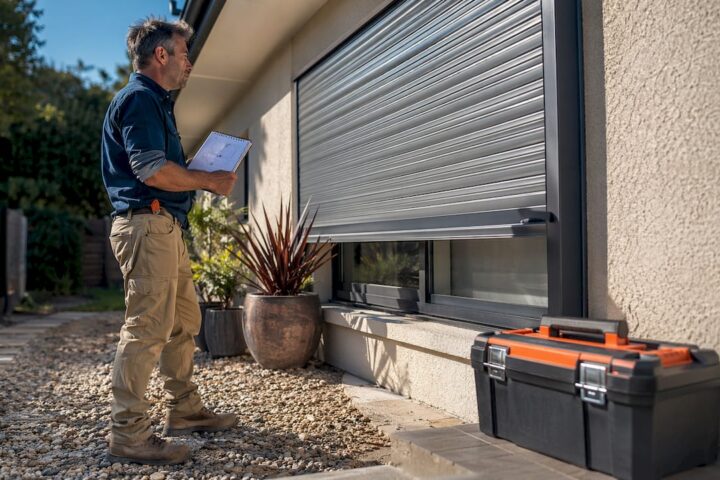
Window security screens are defined as fixed or operable mesh barriers engineered to resist forced entry while maintaining natural airflow and outward visibility. Unlike traditional window security bars, modern screens use high-tensile stainless steel mesh or aluminium frames to deliver protection without the institutional look that puts many homeowners off. Modern screens balance security and aesthetics in ways that older grille systems simply cannot. For Australian homeowners and renters weighing up their options, understanding the differences between screen types, installation methods, and complementary solutions is the clearest path to a genuinely secure home.
1. What are window security screens and why do they matter?
Window security screens are the recognised industry term for mesh-based window barriers built to meet forced-entry resistance standards. The informal phrase “home security screens” covers the same products. Quality screens resist cutting, pulling, and impact forces that a standard fly screen cannot handle. They also let air flow freely and preserve your view outside, which is why homeowners prefer screens that do not compromise natural lighting. That preference drives adoption far more than fear alone.
Custom manufacturing for high-quality security screens typically takes 2–3 weeks and often includes lifetime warranties. That timeline reflects the precision required to cut frames and mesh to exact aperture dimensions. A poorly fitted screen leaves gaps that undermine the entire point of the product.
2. Stainless steel mesh screens
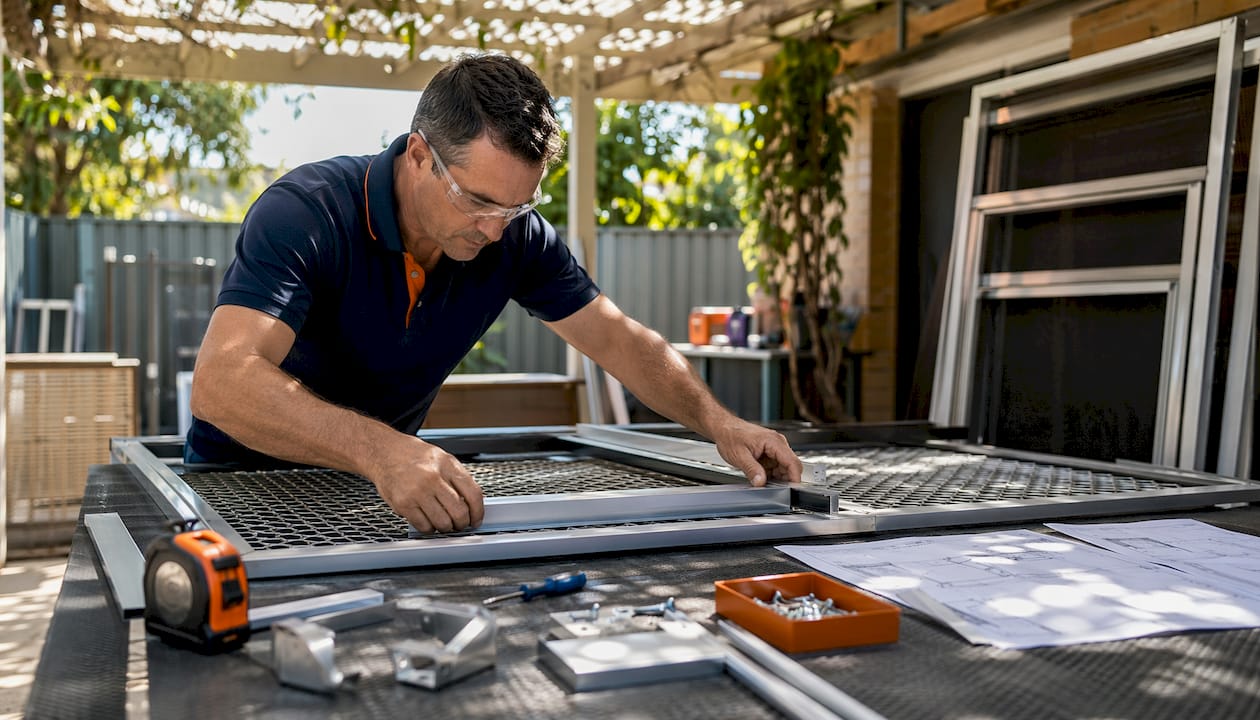
Stainless steel mesh screens are the strongest option available for residential windows. The mesh is woven from high-tensile stainless steel wire and then bonded or clamped into an aluminium frame. This construction resists knife cuts, kick attacks, and jemmy attempts that would defeat a standard insect screen in seconds.
Key features of stainless steel mesh screens:
- High-tensile woven mesh resists cutting and pulling forces
- Powder-coated aluminium frames resist corrosion in coastal and humid climates
- Fine mesh aperture blocks insects while maintaining clear outward visibility
- Lifetime warranties are common on premium products, reflecting long-term durability
- Colour options allow the frame to match existing window joinery
Pro Tip: Choose a mesh with a finer aperture if your priority is insect exclusion alongside security. A coarser aperture offers marginally better airflow but reduces pest resistance.
3. Aluminium frame security screens
Aluminium frame screens use a heavier extruded aluminium profile as the primary barrier rather than relying solely on mesh strength. The frame itself is engineered to resist deformation when force is applied to the corners or centre of the screen. This makes them well suited to larger window openings where a mesh-only panel might flex under load.
Key features of aluminium frame screens:
- Heavy-gauge extruded aluminium provides structural rigidity across wide spans
- Integrated locking points at multiple positions along the frame perimeter
- Anodised or powder-coated finishes in a range of colours to suit heritage and contemporary homes
- Compatibility with sliding, casement, and awning windows when ordered to correct dimensions
- Lower cost than stainless steel mesh options, making them accessible for rental properties
Aluminium frame screens suit renters and landlords who need a cost-effective upgrade without sacrificing a reasonable level of protection.
4. Premium mesh screens for visibility and pest resistance
Premium mesh screens use a finer, more tightly woven stainless steel or fibreglass-reinforced mesh designed to be nearly invisible from inside the home. The result is an unobstructed view out while maintaining forced-entry resistance. These screens are popular in homes where aesthetics carry significant weight, such as heritage properties or architect-designed houses.
Key features of premium mesh screens:
- Near-invisible mesh profile preserves outward sightlines from inside the room
- Fibreglass-reinforced variants add flexibility without sacrificing cut resistance
- Ultra-fine aperture provides superior pest exclusion, including midges and sandflies
- UV-stable coatings prevent mesh discolouration in high-sun Australian climates
- Custom sizing available for non-standard window shapes including arched and bay configurations
Pro Tip: Premium mesh screens work best when paired with a reveal-fix installation. The cleaner frame profile amplifies the near-invisible effect and keeps the window looking unmodified from the street.
5. Face-fix versus reveal-fix installation
Face-fix installs security screens onto the wall surface surrounding the window frame, while reveal-fix installs the screen inside the window reveal itself. The choice between them affects appearance, window operation, and the level of security achieved.
Face-fix advantages and disadvantages:
- Suits windows with shallow reveals where there is insufficient depth for a reveal-fix frame
- Covers a larger surface area, which can improve the seal around the window perimeter
- More visible from the street, which some homeowners find less attractive
- Does not interfere with the window sash or casement operation
Reveal-fix advantages and disadvantages:
- Reveal-fix keeps windows fully operational and produces a cleaner finished appearance
- Requires adequate reveal depth, typically a minimum of 40mm depending on the frame profile
- Sits flush with the window frame, making it less obvious from outside
- Preferred for rental properties and heritage homes where visual impact matters
Custom-sized security screens are the only reliable way to achieve correct fit for either method. Measuring the reveal depth accurately before ordering prevents the most common installation errors. For guidance on installation best practices, professional measurement is always the safer starting point.
6. How security screens compare with alternative window security solutions
Security screens are not the only option for securing windows. Window security bars, security window films, and sensor systems each play a different role. Understanding those differences helps you build a layered approach rather than relying on a single product.
| Solution | Protection level | Airflow | Visual impact | Egress risk | Relative cost |
|---|---|---|---|---|---|
| Stainless steel mesh screen | High | Full | Low | None | Medium to high |
| Aluminium frame screen | Medium to high | Full | Low | None | Medium |
| Window security bars | Very high | Restricted | High | Yes, unless quick-release | Low to medium |
| Security window film | Low (delay only) | Full | None | None | Low |
| Sensor systems | Detection only | Full | None | None | Medium |
Window security bars constructed from solid steel with welded box-section frames offer very strong tamper resistance. The trade-off is significant: bars restrict ventilation, alter the appearance of the home, and create an egress hazard in sleeping rooms unless a quick-release mechanism is fitted. Quick-release bars are mandatory on sleeping-room windows under local building codes in many Australian states to prevent fire hazards.
Security window films delay a window breach by holding broken glass fragments together but do not prevent the glass from breaking. A 7-mil film adds roughly 10–20 seconds of delay. That delay is only useful when paired with a detection system that alerts you or a monitoring service during those seconds.
Layered security approaches combining physical screens with sensors and films yield the best deterrence and detection results. A security screen stops the entry attempt. A sensor detects the attempt. A film buys time if the screen is somehow defeated. Each layer forces an intruder to use different tools and increases the chance of detection.
7. Selecting the right screen for your home
Choosing the best window security solution for your home comes down to four factors: budget, window type, neighbourhood risk level, and the appearance you want to maintain.
Factors to weigh up:
- Budget: Stainless steel mesh screens cost more upfront but carry lifetime warranties that reduce long-term replacement costs. Aluminium frame screens suit tighter budgets without a major compromise on protection.
- Window type: Sliding windows suit face-fix or reveal-fix screens equally well. Casement and awning windows require reveal-fix to remain fully operable after installation.
- Risk level: High-risk areas benefit from stainless steel mesh with multi-point locking frames. Lower-risk areas or rental properties may find aluminium frame screens sufficient.
- Appearance: Heritage homes and architect-designed properties benefit from premium mesh with reveal-fix installation. Standard suburban homes have more flexibility.
Situational recommendations:
- Rental properties: Aluminium frame screens with powder-coated finishes in neutral colours are cost-effective and tenant-friendly.
- Heritage homes: Premium near-invisible mesh with reveal-fix installation preserves the original window character.
- High-risk areas: Stainless steel mesh with hinge reinforcement and multi-point locking provides the strongest deterrence.
Maintenance is straightforward. Rinse mesh screens with fresh water every few months to remove salt, dust, and debris. Check frame fixings annually for corrosion or loosening. For any damage to the mesh or frame, professional screen repair restores the security performance of the original installation.
Pro Tip: Combine your security screens with a monitored alarm sensor on each window. The screen handles the physical barrier. The sensor handles detection. Together they cover both denial and alert functions.
Key takeaways
Window security screens are the most effective single upgrade for window protection because they combine forced-entry resistance, full airflow, and low visual impact in one product.
| Point | Details |
|---|---|
| Screen type matters | Stainless steel mesh outperforms aluminium frames for forced-entry resistance in high-risk areas. |
| Installation method affects usability | Reveal-fix keeps windows fully operational and suits most Australian homes with adequate reveal depth. |
| Bars carry egress risks | Window security bars require quick-release mechanisms on sleeping-room windows under Australian building codes. |
| Film is a delay, not a barrier | Security window film buys 10–20 seconds of delay and must be paired with a detection system to be effective. |
| Layered security wins | Combining a physical screen with sensors and film delivers the strongest deterrence and detection outcome. |
What I have learned from years of watching homeowners choose window security
The biggest mistake I see homeowners make is treating window security as a single-product decision. They install a screen, tick the box, and move on. The screen is the right starting point, but it works best as part of a system.
The second mistake is prioritising cost over fit. A screen that is 5mm too small for the reveal leaves a gap that defeats the purpose of the product entirely. Custom sizing is not a luxury. It is the baseline requirement for the screen to perform as intended.
What surprises most homeowners is how little a quality reveal-fix screen changes the look of their windows. The near-invisible mesh options available today are genuinely hard to notice from the street. That aesthetic outcome is what drives adoption more than any security statistic. When a product looks good, people actually install it. When it looks like a prison, they find reasons to delay.
The trend I find most encouraging is the move toward combining screens with smart sensors. A screen stops the entry. A sensor tells you the attempt happened. That combination is far more effective than either product alone, and the cost of adding a window sensor to an existing screen installation is minimal. If you are choosing the right security door and screen combination, think about the full perimeter, not just the front entry.
— MYBMC
Easterndoors custom security screens for Australian homes
Easterndoors manufactures custom security screens and doors designed specifically for Australian residential properties. Every screen is built to exact window dimensions, with options across stainless steel mesh, aluminium frames, and premium near-invisible mesh to suit any home style or budget. The team provides detailed consultations to help you identify the right screen type, installation method, and finish before manufacturing begins. Turnaround times are kept short without cutting corners on quality. To see the full range of security screens and doors available, or to request a personalised quote, visit the Easterndoors range page and speak with a specialist directly.
FAQ
What is the strongest type of window security screen?
Stainless steel mesh screens offer the highest forced-entry resistance for residential windows. The high-tensile woven mesh resists cutting, pulling, and impact forces that aluminium frame screens cannot match.
Is reveal-fix or face-fix better for window security screens?
Reveal-fix is preferred for most Australian homes because it keeps windows fully operational and produces a cleaner finished appearance. Face-fix suits windows with shallow reveals where there is insufficient depth for a reveal-fix frame.
Do window security screens replace the need for security bars?
Security screens provide comparable or superior protection to bars for most residential applications, with the added benefits of full airflow and no egress risk. Bars require quick-release mechanisms on sleeping-room windows under Australian building codes.
How does security window film compare with a security screen?
Security window film delays a breach by holding broken glass together for roughly 10–20 seconds but does not prevent entry. A security screen physically blocks entry and provides a far stronger barrier when properly installed.
How often do security screens need maintenance?
Rinse mesh screens with fresh water every few months to remove salt and debris, and check frame fixings annually for corrosion. Damaged mesh or frames should be repaired professionally to restore full security performance.